We make SMEs fit for the future, also on the sustainability front.
In our corporate social responsibility (CSR) activities, we focus on those areas of action in which our business model is particularly effective and efficient in creating additional ecological and social benefits. As an IT service provider, we support our customers in meeting their objectives not only for digitalisation, but also with regard to sustainability.
Our solutions provide a contemporary response to current economic, ecological and social challenges.
Our solutions
Digitalisation:
Digital technologies have fundamentally changed customer behaviour and the world of work. Accelerating the digitalisation of business models and business processes is one key challenge faced by companies in all sectors. We accompany our customers on this course.
Climate change and growing scarcity of resources:
Digitalisation is a lever that enables companies to make more sparing and effective use of resources in production, reduce consumption and cut CO2 emissions. These digital technologies are also used on an ecologically sustainable basis. At our energy-intensive high-performance data centres, we are virtualising infrastructures and applications, using efficient climate control technology and procuring all the electricity we use from renewable energies.
Cybercrime:
As a digitaliser, we have a particularly great responsibility to ensure data protection. Reliably protecting data with our extensive cybersecurity services and securing the infrastructures and systems we deploy are among our core competencies. These actions form the foundation for building customer relationships based on trust.
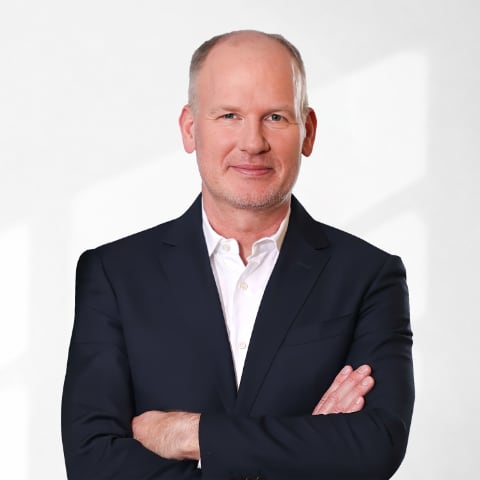
„For us, business activity that is economically, ecologically and socially responsible is an investment in our own future operating capacity and one way to secure our business resilience. Our sustainability strategy is therefore an integral component of our corporate strategy.“
Thies Rixen, CEO of q.beyondMateriality
Sustainability makes key contributions to our business resilience. We see “business resilience” as the ability to withstand external crises and disruptions in social, economic, environmental or political conditions (resistance), adapt to new conditions (adaptability) and thus maintain our stability despite external impacts.
Here, the following topics are at the forefront: Sustainable growth, robust core processes, satisfied and innovative employees, consistent customer focus and a portfolio that reacts rapidly enough to economic, ecological and social developments.
Our material sustainability matters:
- Impact of climate change on own operations
- GHG emissions (Scope 1, 2 and 3) in own operations
- Energy in own operations
- Working conditions in own operations
- Equal treatment and equal opportunities for all in own operations
- Other work-related rights: Data protection in own operations
- Information security, data protection and IT security to protect our customers
- Market positioning through sustainability
- Corporate culture and compliance
Our sustainability objectives
-
Resilience of data centre infrastructure to climate change - Looking ahead, climate change is set to lead to higher outdoor temperatures, particularly during the summer months. Medium- to long-term temperature forecasts indicate that the cooling capacity of the air-conditioning systems we use in our own data centres will face increased demands. With our climate change adaptation strategy, we aim to ensure the uninterrupted operation of our data centre infrastructure. As we operate our customers’ IT solutions in our data centres, our strategy is also the subject of informal discussions with customers and incorporates their suggestions. In the 2025 financial year, we carried out a climate scenario, risk and resilience analysis to examine the physical impacts of climate change on q.beyond in relation to various climate scenarios. The effectiveness of the measures we have initiated and already implemented to adapt to climate change and build a resilient economy was verified as part of a resilience analysis.
-
Reduce CO2 emissions - Based on our CO2 footprint in 2019, we want to reduce our emissions from electricity, fuels and business travel by at least 40% overall, offset the remaining emissions and also offset all major sources of emissions along the value chain through to delivery to the customer. By the end of 2026, we want to reduce the emissions of these emitters by at least 60% compared to 2019.
-
Compliance with the European Code of Conduct on Data Centre Energy Efficiency - We aim to support the sustainable transformation in the overall economy and, by also operating our data centres in accordance with the official criteria of the EU Taxonomy, aim to make a substantial contribution to the EU objective of “climate change mitigation”. That is why we are already working closely to implement all relevant practices of the European Code of Conduct on Data Centre Energy Efficiency. By the end of 2026, we aim to comply in full with the requirements of the Code.
-
The share of women in management positions is to be increased in the coming years - We intend to raise the share of women managers in the years ahead. Based on the overall Group (q.beyond AG and its majority-owned subsidiaries), a 20% share of women is to be achieved in the first two management levels below the Management Board and among other management staff by the end of 2026.
-
Internationalisation - The internationalisation of q.beyond is to be driven forward in order to extend the company's market positioning to foreign markets and thus exploit business opportunities that have already been identified. This will also make it easier to recruit sufficient junior staff and specialists and thus meet the demand for talent and their further development in the long term. After all, a shortage of skilled labour can also threaten the implementation of our business plans. This is why we are increasingly focussing on the talent pool at our nearshoring and offshoring locations, particularly software developers and IT specialists.
-
Addressing additional target industries by expanding industry expertise - q.beyond is aiming to expand its business activities to include customers in other, as yet unaddressed business sectors in order to strengthen its overall market position and thus consistently expand its business volume. The planned industry expansion requires the targeted transfer of industry expertise to employees and the continuous development of specialists and managers in the key industry topics.
-
Expand service portfolio - We aim to continuously add new and additional digital sustainability solutions to our portfolio and test them in real-world customer applications. In the 2025 financial year, we expanded our range of services, particularly in the area of security, as well as through innovative AI-based consultancy services and solutions.
Our sustainability reports for download